
Eric and I were delighted to be invited to Brazil to give a series of presentations in Sao Paulo at their annual geriatrics meeting. We met people doing important, interesting, and innovative work in Brazil and throughout Latin America. We got the audience to sing along, including (in another talk) the magnificent Brazilian song Sozinho by Caetano Veloso in Portuguese, with my son Renn playing guitar.
For our final talk, a podcast in front of a live conference audience, we asked our 3 guests, Eduardo Ferriolli, Marlon Aliberti, & Edison Iglesias to select a recent article to discuss. We talked about:
- Intrinsic capacity (selected by Eduardo). What is it? What is it used for? How do you measure it? (hint ICOPE). Eduardo emphasized that intrinsic capacity is a positive aspect of aging, focused on potential rather than deficit. We asked him to work intrinsic capacity into George Kushel’s famous analogy using the golden gate bridge to describe phenotypic frailty (pillars), deficit accumulation frailty (cable supports), and resilience (withstand stress of wind and cars). Eduardo says intrinsic capacity would be the car, and would vary by type of car and intended purpose. I loved Eduardo’s selected article, which percentiles intrinsic capacity, in order to use within individuals to assess how they’re tracking over time, and at a public health level, to identify regions or groups of people with lower intrinsic capacity. He draws the analogy to growth curves in pediatrics – if you’re consistently at 80% – then drop off – your primary care provider should take notice and investigate/intervene.
- Geriatric syndromes in hospitalized older adults (selected by Marlon). If intrinsic capacity is for primary care, our guests argue that the comprehensive geriatric assessment, which takes a long time to administer, should be reserved for specialist geriatrics. And yet, this paper finds that a limited shorter version of the comprehensive geriatrics assessment can document geriatric syndromes in hospitalized older adults. Accumulation of multiple geriatric syndromes is associated with increased mortality, and presents an opportunity for risk stratification, goals of care discussions, and intervention.
- Advance care planning across Latin America (selected by Edison). Back around 2005, when Edison first heard about advance care planning, he says, “it sounded like science fiction.” In Brazil, as with Latin America, medicine was highly hierarchical and patriarchal. Doctors knew best. The doctor decided. If there was no patient choice, why would there be a system to protect the decisions of patients made in advance? In the intervening years, Edison and others have worked to incorporate and adapt advance care planning to the Latin American context, which is much more focused on family-centered relational autonomy than individual, and incorporates spirituality to a much greater extent. Edison has been mindful too of not repeating the mis-steps of the advance care planning and advance directive movements in the US.
We took questions from our audience and sang “Imagine” in Portuguese together. Enjoy!
-Alex Smith
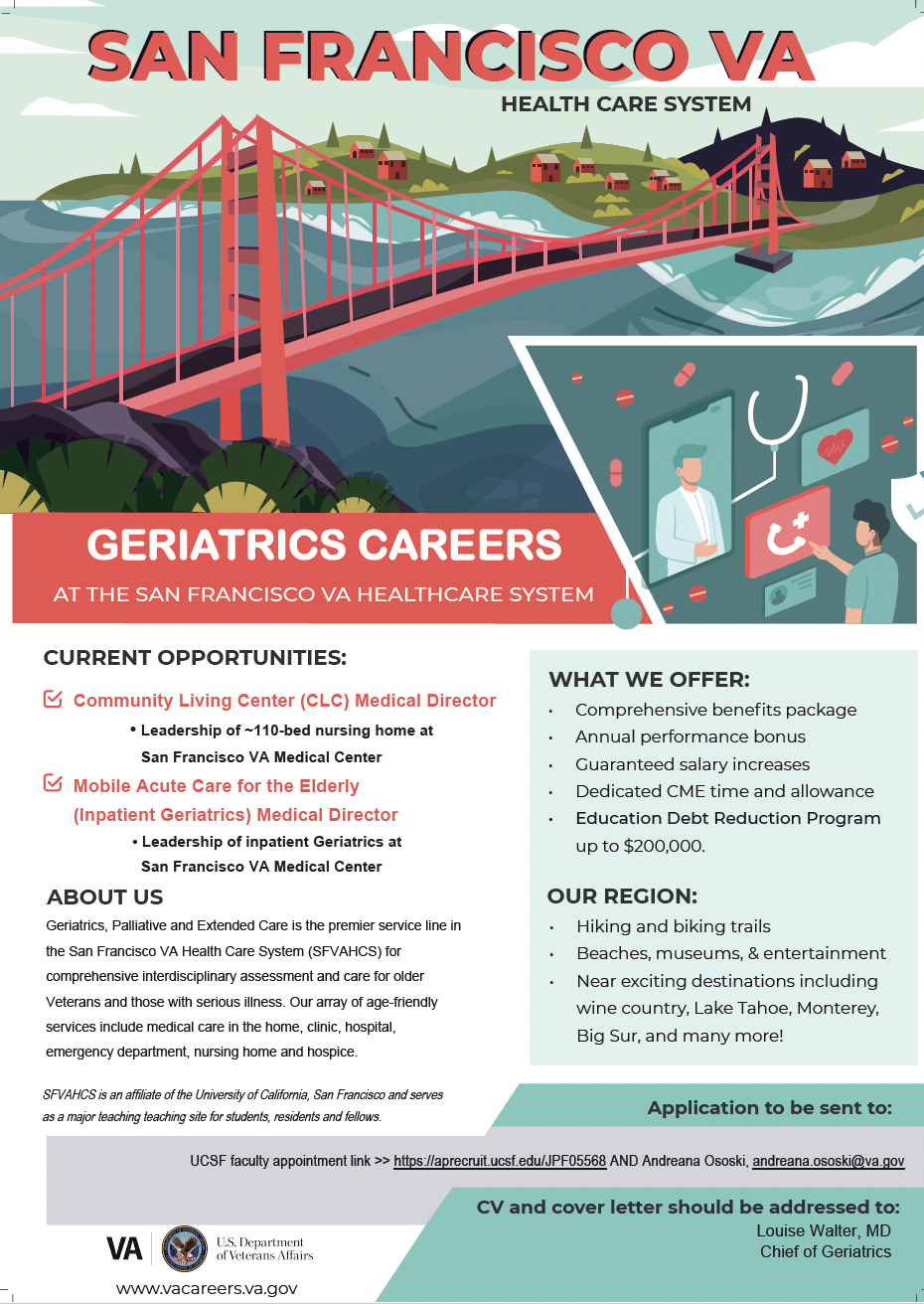
👉 This episode of the GeriPal Podcast is sponsored by the San Francisco VA’s Geriatrics, Palliative and Extended Care Service line. They are looking for a Community Living Center (CLC) Medical Director and an Acute Care for the Elderly (Inpatient Geriatrics) Medical Director. To apply, go through the UCSF recruiting website here: https://aprecruit.ucsf.edu/JPF05568 AND email Andreana Ososki, andreana.ososki@va.gov. For questions, email eric.widera@ucsf.edu
** NOTE: To claim CME credit for this episode, click here **
Alex 01:01
Bem-vindo ao podcast GeriPal. Aqui é Alex Smith.
Eric 01:04
E eu sou Eric Widera.
Alex 01:08
All right, and the rest of this podcast we are going to do in English for our listeners.
Eric 01:14
Naomi laughed when I said my name, but you did a really good job, Alex.
Alex 01:18
Eric, why are we speaking in Portuguese?
Eric 01:21
That’s a great question, Alex. We are in Sao Paulo right now. Why are we in Sao Paulo?
Alex 01:25
We are at the GERP conference. Am I saying that correctly? Yes, in Sao Paulo, Brazil. We’ve been delighted to speak here. This is our fourth talk, I think in the last three days, our fourth talk. We’ve had a wonderful time meeting many great geriatricians and people from all sorts of professions interested in geriatrics and geriatology and aging research.
Eric 01:46
We met other podcasters, too. So Jerry Klass, Raphael Duncan and Daniel Gomez were both here. We learned about the Geripal podcast. We heard about other podcasts like Pali Papers. So really amazing stuff that we’re learning at GERP.
Alex 02:03
And we’ll make sure to include a link to those podcasts in the show notes associated with this podcast. So for our guests today, we’d like them to introduce themselves. First of all, this is my son over here, Renn Smith, who’s played on several Geripal podcasts in the past. Renn, do you want to say hola?
Renn 02:20
Hola.
Alex 02:22
Okay, great. And we’ll start with Edison here.
Edison 02:25
I’m Edison Vidal. I’m a professor of geriatric medicine, Palliative Care, Sao Paulo State University in Botucatu.
Eduardo 02:33
Hello, I am Eduardo Ferriolli. I am a professor of geriatric medicine at the University of Sao Paulo Medical School.
Marlon 02:42
Hello, I’m Marlon Aliberti. I am a geriatrician and clinical researcher and at the University of Sao Paulo here in Sao Paulo.
Alex 02:49
All right.
Eric 02:50
Okay. So what are we going to be doing? What papers are we going to be talking about today?
Alex 02:54
Today we’re going to be talking about three papers. One is related to intrinsic capacity, and we’re delighted to talk about intrinsic capacity. The second is going to be about geriatric syndromes and especially measurement in the hospital and association with mortality. And the third is about advanced care planning across Latin American countries.
Eric 03:16
But before we talk about all of those articles, we always start off with a song request for the Geripal Podcast. Who has a song request? Edison.
Edison 03:26
Well, my song request for Alex is Imagine by John Lennon.
Alex 03:30
Terrific. And why this song?
Edison 03:33
Well, the song is from the 1970s, and that was a time of war. We are now in a time of war again with geopolitical climates. That’s very dumb and dangerous. And the same need for change that was there is now again present. And on another note, as geriatricians and palliative care physicians and gerontologists and everyone involved with aging, we are a little bit of dreamers ourselves, dreaming for a better world for older people and for everyone.
Alex 04:07
That’s beautiful. So we’re going to sing this song in Portuguese. And if our audience could please help me out by singing along, that would be wonderful.
Alex 04:25
(singing)
Eric 06:24
I have to say that when we were invited to this conference, I started learning Portuguese on duolingo. The only thing I learned to do initially was to ask for tea in Portuguese. And then I was told by one of our Portuguese colleagues that they don’t drink tea, sometimes only coffee.
Alex 06:44
Sometimes there’s no need to learn how to ask for tea in Brazil.
Eric 06:48
So I gave up learning Portuguese and duolingo. But Alex spent the last four months.
Alex 06:53
Four months learning Portuguese. Espedando Portuguese para cuatros meises maisonos. Okay, enough about my Portuguese, Eric.
Eric 07:06
So we’re going to start off with this first article. It’s about something I’ve actually never really heard about before, which is intrinsic capacity and what it means. So this article in particular was published in Nature Aging Reference Centiles for intrinsic capacity to monitor clinical health outcomes in real world primary care cohort. Eduardo, you picked this article. Why did you pick this article?
Eduardo 07:32
First of all, thank you for inviting me to be here. It’s a great honor, Great pleasure. I chose this article because it deals with a theme that is very important. It needs to be discussed. Intrinsic capacities. Kind of new. A new concept. It has 10 years now and was proposed by the WHO for following up people from their midlife until they are very old to detect the loss of capacities and treat it accordingly. Immediately timely, with the support of a whole primary care team.
Eric 08:11
What actually is intrinsic capacity?
Eduardo 08:14
Fine. Intrinsic capacity is all the resources you have in your body and mind to deal with your life and to attain your objectives. There is one important issue and concept that people don’t understand very well or it’s not very well defined or defended by. Who talks about intrinsic capacity. That is the concept of functional ability. When we talk about functional ability, everybody thinks about function. And that’s measuring your walking speed or your hand grip strength or whatever, idls, iadls. Yes, but your functional ability is the capacity to live fully.
Your goals of life, depending on your values. It depends on your intentions, your values, your goals, personal goals. And intrinsic capacity is kind of the machinery in your body and mind to attain those objectives. So what is important is you need to have the resources. So intrinsic capacity is talking about resources you have and not frailty or loss of resources. So everybody has intrinsic capacity. Some people may have frailty or not, but intrinsic capacity everybody has. And the concept of intrinsic capacity is measuring its main domains and follow it as much as we do with child growing. So we have growth charts and everything else, weight charts. There should be charts for intrinsic capacity and you measure them from midlife on. And when there is a decrease, or if you’re below the usual place in this chart, you should be assessed more deeply to enhance your intrinsic capacity or to solve your problem.
Alex 10:19
That is a terrific analogy, Eduardo.
Eduardo 10:22
Thank you.
Alex 10:23
The intrinsic capacity, and I think this is what this article is about, is about, like, what are the normal, you know, 90th percentile, 50th percentile across a range of ages. Is that right?
Eduardo 10:36
Yeah, that is it. And also you need to think about the intrinsic capacity domains separately too, because they were defined in 1918. The six main domains you need to preserve to age well. And these six domains are memory, so that’s cognitive function. You need to have mobility, so you need to be able to walk and to go to places. The third is emotional, so it includes both your emotions, depression and so on, and your relationships with people.
The fourth is vitality. This is the most disputed one for definition, but it’s basically the equilibrium of your energy supplies and your machine, your physical machine. So that’s mainly nutrition, really, how if your weight is stable, if you’re fit enough. The fifth is vision. It’s so important for interacting with people. And the last one is hearing. That is also important that we, nowadays, we even know that low problems with hearing can take you to dementia states in the future. So those are the six domains you
Alex 12:00
should and I think we’re going to get back to because we want to hear more about what some of these domains, you know, drill in into it a little bit, maybe what is vitality. But before we get there, let’s put a pin in that. Another analogy that we’ve talked about frequently on the Geripal podcast is the Golden Gate Bridge analogy to understand phenotypic frailty, like the Terry Fried model, the Rockwood deficit accumulation, sort of frailty and resilience. And that analogy is the Golden Gate Bridge, which Eric and I love because it’s in San Francisco, which is where we live and work. And the analogy is that the main supports of the Golden Gate Bridge, those towers, are phenotypic frailty, right?
You lose one of those and the bridge is in big trouble, right? And then the Rockwood deficit accumulation, those are the little cables that run up to the big major cables that suspend the bridge, right? And if you lose one of those, okay, the bridge is fine. If you lose several of those, it might be a little less stable. But if you lose a lot of them, then the bridge is in trouble. And resilience is the ability of that bridge to withstand the stresses of wind, the forces of the cars on top of the bridge. And so, Eduardo, in this analogy, is there a way that we could. How would we fit intrinsic capacity into this analogy for our listeners? Is there a way to.
Eduardo 13:26
I think so. The way would be the car you’re in, because the car you’re in is your machinery, your transport device to cross the bridge and to go to where you want to go. And the place you want to go is your functional ability and the car is your intrinsic capacity. So if your goal is to do off road driving, you need a big car with high wheels and so on. If you’re going to a beach or whatever, you can have a smaller car with less resources and even you can choose the color of your car, your preference in terms of color. You need all the car devices, all the instruments to get to where you want. So I would say that’s intrinsic.
Eric 14:23
I also wonder from our other guests, because it’s really Interesting, because when I think about frailty, when I think about resilience, it’s focused on like, you know, parts of, like, the body. It’s focused on generally, like, disabilities, things that are going wrong. And the purpose of, let’s say this analogy of the bridge is not to be a bridge. The purpose is to actually move things back and forth across the bridge. That is, the purpose of the bridge is not just to hold itself up. Else why would you have a bridge? I want to. Marlon, I’m going to start off with you. How. How do you think about this analogy of the bridge? Like, it even. Does it even make sense for intrinsic capacity?
Marlon 15:00
I think. I think that’s perfect. The analogy with frailty from 2017 in Jags was perfect to understand frailty. And now using the car for intrinsic capacity is so nice. And I would like just to add something there. It’s that everybody who goes to San Francisco would like to see the bridge and say, wow, this is so beautiful. And who tends to see the way we got older, not only with disability, not only with losing reserve, but what your capacity, how you can maintain your capacity to live well, to do the things you like to do, despite being, having or being 70 years old or 80 years old or 90 years old. So the bridge also bring dispute that who wants to bring to the aging fields. Yeah.
Edison 15:51
When I think about increasing capacity, I can’t avoid thinking about frailty also, and also about the history of geriatrics. Geriatrics as a specialty evolved. Perhaps it started in England with Marjorie Warren and general physicians that then would look at an older adult and see age and see perhaps comorbidities. And then perhaps the first major concepts in geriatric medicine when it was being born, was that we could look at these people not only regarding age and comorbidity, but also regarding function. And we could, by focusing on function, we could also focus on rehabilitation.
And I think this is something that differentiated geriatric medicine from other fields. And for a large part of geriatric medicine’s history, it was. Our main focus is to teach people how to look at function. This is still needed. And then in the early 2000s, the concept of frailty arose. And it allowed us, just as the concepts of functional status, to see things that were invisible before. And we started looking at people, and so now we look at the functional status was invisible, and we can see how to rehabilitate them. Now we look at frailty, and then we can see something that was below our rudder. When I think of intrinsic capacity, I think it’s different. I think that we are not looking at something that is not there. We are trying to perhaps to remind ourselves of components of comprehensive geriatric assessment, a multidimensional geriatric assessments, and try not to forget them.
Because when we focus on any of these things, sometimes we can focus too much on one aspect. For example, if I like cognition, I can focus too much on cognition and leave mobility behind, or sensory systems, vision and hearing. And I think that intrinsic capacity is a way of trying to broadening our view and remind ourselves to respond to the challenge of geriatric medicine, which is seeing the whole person.
Eric 17:57
So I got a question. So in geriatrics, we have a long history of making new terms up. We do, we do. But important new terms.
Alex 18:07
Delirium, right?
Eric 18:08
The disablement, sharing it in a way.
Alex 18:10
Frailty, different types of frailty, phenotypic deficit, accumulation, resilience, intrinsic capacity, the list goes on. Geriatric syndromes.
Eric 18:20
And then we gotta. Then we gotta teach everybody all these new terms, right?
Alex 18:24
You should be measuring this. Oh, and that and the other and everything. Is there a risk here that we’re gonna lose our audience? Like the other clinicians who are not geriatricians, much less geriatricians. Like, how can you keep track of all these things and how they’re different and overlap in many ways?
Eduardo 18:40
The main thing about intrinsic capacity. Thank you for this question. It’s very important because the idea of intrinsic capacity, when the WHO thought about or designed this proposal, they thought about the application of all those concepts and especially intrinsic capacity in any country, every country. So it doesn’t depend on your resources or if having a geriatrician in some places there aren’t physicians they have visited. So the idea is that you will apply this concept at the primary care unit or the primary care physician.
And he doesn’t need to know all those concepts because the five, the six domains are so straightforward to tackle. You don’t need to think about frailty or the concept of frailty or CGA or whatever when you’re talking about eyesight or when you’re talking about difficulty to walk. And the manual of the who, or how you can apply this concept in the iCope framework, that’s the integrated care for older people, is that for each domain you have clear steps on how to deal with. With losses. Focused, straightforward, based on the literature. But you can teach people, the front people, the people dealing with doctors and nurses and all the health professionals dealing with the population to understand easily those domains and how to measure Them and what to do.
And when things get complicated because you have a loss of memory or something that is difficult to understand in the primary care, you refer this to specialists. Then it goes to geriatrics, to neurologists or whatever, whatever. But it helps people not to need to understand all those concepts but to deal with the main things in the primary care.
Eric 20:56
And we’ll have a link to the WHO ICO website and the PDF that actually does a really good job of showing all of this. And I get. It’s actually not that complex once you kind of dive into it. Except for one. So vision and hearing seems very simple. Cognition and function. The fifth is
Edison 21:20
mobility.
Eduardo 21:20
Mobility, Mobility and vitality.
Eric 21:26
What is vital? That one I still confused about. What is vitality?
Eduardo 21:32
There’s been a whole bunch of discussions about what vitality is. And first the idea was vitality is nutrition. You need to have a good stable nutrition status to live well. And we know that other people losing weight, they are in real danger unless this has been programmed and supported. So first of all the idea was this is nutrition, this is energy and protein equilibrium. But as time went by, people thought no, this is the whole machinery.
You need to think about the liver function or heart function or muscle function because all of those would be vitality. But the idea is to measure those things. In the community it’s very difficult to measure all those variables. So nowadays it’s mainly really your weight and your nutritional state and hand grip strength. That’s what they measure most, which is disputable. But that’s what is done in the primary care units. But I think nutrition is a good starting point to measure how your your body is is doing.
Edison 22:58
Yeah, My intuition is that vitality would measure fatigue so that how much energized include fatigue.
Eduardo 23:06
So you’re getting tired.
Edison 23:07
But I’m curious, I wanted to know your opinion on this. Perhaps this is controversial. So my feeling is that the concept of intrinsic capacity is less useful for geriatricians and gerontologists working with older adults who already have incorporated the idea of geriatric assessments and multidimensionality into their day to day tasks. And that’s perhaps this concept is more useful and was even targeted to geriatricizing, sharing the geriatrics and gerontology knowledge with other healthcare professionals. So that’s there. As you were speaking in regarding primary care, is that the idea?
Eduardo 23:49
I think geriatricians must know the concept and how it works. But if you think about geriatrics, I would love to know more about geriatrics. In the US but in Brazil and some European countries, geriatric is a tertiary care specialty, secondary tertiary care. So usually when someone comes to us, they need comprehensive geriatric assessment. They need the tools the geriatrician and the geriatric team, the gerontology team have for dealing with those losses. Intrinsic capacity is more to preventing losses.
That’s why I say that this is for the whole population. There are proposals that intrinsic capacity. In France you can self assess your intrinsic capacity online or using an app that is monitored by the government, by the Health Ministry. And there was a proposal once in the WHO that intrinsic capacity should be available in post offices. Form little form post offices and anywhere.
Marlon 24:59
Yeah.
Eduardo 24:59
In health centers, post offices, drugstores, pharmacies. Because the idea is to measure in everybody to keep track of what’s going on, to do really tool for following what people long life.
Eric 25:16
I’m going to turn to our Brazilian audience here. How many of you have heard of this concept of intrinsic capacity? Raise your hands. That looks like the majority, right Alex?
Marlon 25:27
Yeah.
Alex 25:27
And if we ask this at an AGS meeting, what do you think?
Eric 25:30
So in the United States, I think very, very few people would know what intrinsic capacity is.
Alex 25:36
Yeah. Here it looked like 80, 90%. 90% plus.
Eric 25:40
Marlon, you spent time in the United States. Why do you think the United States we don’t even know you don’t use this concept of intrinsic capacity.
Marlon 25:49
I think the connection of some countries with WHO is stronger than the US we depended more on the resources that WHO shares with some countries. And Brazil has a strong connection. But to tell you the truth, I was at Hopkins last year and this March there was a conference there, International conference on Freud and intrinsic capacity and Sarcopenia that was based there at in Washington D.C. so I think things are changing in the US and are starting people are starting to discuss this multimodal system and how to add this new concept in the US health care system.
Alex 26:39
I love the concept of intrinsic capacity is the growth curves of aging and how your paper began to define some of those curves that of course would require local calibration. Right. This is in Latin American countries and in the US might be different. And the idea that this is intrinsic to the person and this is for primary care and democratizing. Anybody can do this on their own and keep track. The other important thing is each of these domains are domains that there are interventions for and there are effective interventions prove with data behind them for most of these domains and the quality might not be as good for some of them. But for Most of them. Is that fair to say, Eduardo?
Edison 27:21
Yeah, yeah.
Eduardo 27:23
The domains were there all the time. The thing is they organize the main ones using previous longitudinal studies or APP days. So all the domains, you can deal with them properly. Of course there are some that are more difficult, some are less difficult, but all of them have been proven to be treatable.
Alex 27:48
We could develop interventions. So if we take the car analogy, you know, you might have balding tires, not much tread left. You can get new tires, right. You have hearing loss, you know, you could get, you could get a walker to help you with your mobility. If you’re running out of gas, maybe that’s the vitality. You can get more gas. You haven’t had your oil changed. Right. There are all these different systems in the car that you can intervene upon in order to make the car go smoother, to meet your goals, to get farther. Right.
Eric 28:14
So, Eduardo, I got one more question about this paper. I know we haven’t dived into a lot of the methods and what it’s about, but unfortunately we don’t have the time to do all of that. But what do you think is the importance of this paper?
Eduardo 28:26
I think the importance of this paper is that for. I don’t know if the first time, but certainly one of the first times we’ve used the instrument, the tool of who to measure intrinsic capacity in the primary care, the screening tool to build those charts. And it’s more than 17,000 people being measured in the community. It’s a community based. It’s not. Most of the studies beforehand were based and still are based on longitudinal studies that we try to extract from the variables available, the intrinsic capacity. This one was using the tool by WJU and even using those, that tool because there is some dispute on how accurate.
How accurate it is. Even using that tool we were able to build the curves and to show that you have the centiles and you can place someone in the centiles and show to people you’re here comparing to your mates of the same age. So we may have a problem and look at it now. We found in this paper that as you said, there is the need of calibration. We need to calibrate it for lower income countries or for specific countries because the one coming from France, Brazil was placed below, mainly below the 50s.
Eric 30:04
Different curves for countries.
Eduardo 30:06
Yes, for countries, but it’s a good start, starting point, showing those things.
Alex 30:11
Does anyone in the audience have a question? If you could raise your hand, we could bring the microphone to you. Anybody chance to get on the Geripal podcast. Okay, well, keep thinking. Eric, should we move on to the next.
Eric 30:26
Yeah, we should move on to the
Alex 30:27
next article, which is related because we also mentioned the comprehensive geriatric assessment.
Eric 30:32
So this is the change study. Geriatric syndromes and mortality among hospitalized older adults. Why did you do this study?
Marlon 30:44
Well, we think vulnerability is the core of our job, our work. What makes us special is that we know that it’s important to measure vulnerability and look beyond what the patient has. And these conditions are. Geriatric syndromes are just forgotten, especially in acute care, like hospitals. And we know that every older adult that goes to the emergency department and are admitted to the hospital, they care much more than pneumonia or an urinary infection or a stroke.
They carry many other measures that impacted their outcomes. But although before people has investigated a lot specific geriatric syndromes and are so expert talking about delirium, talking about disability, and talking about loneliness. And in this study we try to combine everything together just to see how does it work as a package.
Eric 31:53
So you focused on the study on the incidence. You wanted to see the incidence of geriatric syndromes. And what does that mean for outcomes? Is that correct?
Marlon 32:02
Yeah. Oh, no. We look at prevalent geriatric syndromes, but there is something important here. Most of them people had already this geriatric syndrome, a condition before the admission, but some of them, like delirium, they had like connected with the acute condition. So it’s a mixed measure of previous vulnerability and acute vulnerability as well.
Eric 32:29
And the reason you focus, you just focused on geriatric syndromes. You didn’t include like diseases as far as multimorbidity. And again, the reason that you did that, that focused on the syndromes instead of like, I see like disease counts or something like that. Yeah.
Marlon 32:49
When we see these patients, this population, 92% has multimorbidity. So having just a list of diseases is not enough. It doesn’t help us to disentangle between those who has a high risk of death and those who have a low risk. So for us, the most important aspect is not having a disease, but how this disease is impacting function and geriatric conditions. Geriatric syndromes is the way we measure how the disease are impacting function, which is in our opinion the best way to make a better prognostication for older adults.
Eric 33:30
And importantly. So you’re looking at prevalence of these geriatric syndromes. Did I use the correct word this time? Prevalence of these geriatric syndromes. But you also, in the study you looked at five countries in Latin America, right?
Marlon 33:44
Yeah.
Eric 33:45
And in the beginning you called it low and middle income countries.
Marlon 33:48
Yeah.
Eric 33:49
Why was that important?
Marlon 33:51
Yeah, that is important because most of previous studies are from high income countries. Even though with aging worldwide, 75% of older people will live in low and middle income countries. And we have very few studs before understanding how these geriatric syndromes work in our conditions. We know that in our setting, in our healthcare systems, in hospitals, people work even with lower resources, with less time. And I think doing that, we also have the chance to say, well, if in these hospitals we can do that, everybody can do that in other. In other places as well.
Eric 34:31
And I got another question. I’ll let you ask the next one after this. Sorry for hogging this, Alex. So Alex and I have had a chance to go all around a couple places in Brazil. We landed in Rio together. We had a beautiful time in Iguazu Falls and we’ve spent time in Sao Paulo. And one thing that struck me here is the food is amazing, the people are amazing. You can go to a stall and get some of the most delicious Brazilian food I’ve ever had in my life, or food I’ve had in my life in just a stall. You can also go to one of the nicest restaurants in the world where you see people in outfits that are expensive, you see, you know, the finest bottles of wine.
So you see a big difference between the haves, the people who have a lot of money and the people who don’t. Rio was very like. You actually saw the favela next to the fancy hotel. I wonder, when we think about low and middle income countries, there seems to be a huge difference between those, the haves who have a lot and the have nots. How do you think about it in the context of this study?
Marlon 35:43
Yeah, we tried to capture this difference. We have so many differences. For example, 76%, almost 80% of our hospital are public hospitals who tend to admit people from the lower levels of socioeconomic status. But we also investigated hospitals that are private and tend to attend. So we tend to do a mix. But respecting like 80% of the population attending public hospitals and 20% having access to better care.
Eric 36:18
Yeah. And I think the mean education was five years of education.
Marlon 36:21
Yeah.
Eric 36:22
Arguing that this is not the people of those fancy restaurants that.
Eduardo 36:25
Yeah.
Eric 36:25
That we were seeing.
Marlon 36:26
One of the hospitals, two of the hospital, the mean education level was 14 years. It’s 14 years mean. But when you see as a whole population, five years mean. So we try to capture all this difference in the same population.
Eric 36:41
Yeah. I wonder if I can take a step back. How do you think about this for your article in intrinsic capacity?
Alex 36:47
If I could add to that. Earlier you helped us by saying that intrinsic capacity is for primary care and now we’re talking about hospitalized older adults. And you said before that by the time they get to a geriatrician they need a comprehensive geriatric assessment. In my view, the comprehensive geriatric assessment is that it includes intrinsic capacity and what we might say is extrinsic capacity, social relationships, social support. There’s also a component of comprehensive geriatric assessment. How do you think about these? Should every older adult who is seen in the hospital get some sort of comprehensive geriatric assessment? I know we’ve talked about this before. Do we need a geriatric specialist, Eduardo?
Eduardo 37:34
I wouldn’t say so. And not every older people. There’s been a lot of publications before measuring the benefits and the cost, especially not risk, but cost of CGA and geriatricians in hospitals. And the common sense nowadays is that frailer older people certainly need full assessment, cga, comprehensive geriatric assessment and the visit of a geriatrician. But if they come really fit, they are all right, they are doing well. That is less important.
You don’t need the geriatrician to look at this. But there’s a very important. But I think brief assessments, like the Taga 10, I don’t know, is in English, there’s another name for that. But a brief assessment. And there are many brief tools to indicate that someone needs a comprehensive geriatric assessment. The brief tools should be available and applied to every other person getting into hospital because getting into hospital is a sign you’re in real trouble and that probably there is a good chance you’re less fit.
Eric 38:57
Yeah.
Eduardo 38:58
So I would do a kind of a screening tool in the entrance of the hospital admission and then decide if you need a special assessment or not.
Eric 39:09
What is the 10 minute targeted geriatric assessment? What is that?
Marlon 39:13
Yeah, it’s a way to make comprehensive geriatric assessment available for fast paced healthcare settings. Well, we give many classes as geriatricians talking to our students and our other medical colleagues, saying that, well, making comprehensive geriatric assessment is so important for the care of older adults. But in reality, in the real life where people are working, they don’t have the skills, they don’t have the time.
So targeted geriatric assessment was developed seven years ago with the idea to make it more accessible when you don’t have Enough time, you don’t have the resources you need. So it’s simple, it’s fast. And in the change study, we are just validating this targeted geriatric assessment for the hospital, and we are showing that it can be performed or applied in six minutes.
Alex 40:15
Six minutes. Good. We’re down from ten to six.
Marlon 40:18
Yeah.
Alex 40:18
Getting there. This is great. This is getting much more.
Eduardo 40:24
I think the time is important.
Eric 40:25
Yeah.
Eduardo 40:26
Because in the. In the emergency room, nobody has time for nothing. And in hospital, time is also a very difficult thing to find.
Edison 40:36
In a sense, I have the feeling that both papers, they are deeply connected because intrinsic capacity and geriatric syndromes are things that are not there to see. They’re not real things. They’re concepts that we create to help us do things better. And so. And I think that the two of them can call attention to common problems and older adults that go often go overlooked. And I think it’s fascinating and it’s a way of teaching geriatrics and gerontology to the world. It’s wonderful.
Eric 41:11
And where does geriatric syndromes fit into intrinsic capacity?
Eduardo 41:15
I think there is an interchange. There is a.
Eric 41:20
Is it part of one of the
Eduardo 41:21
six components or all the six components interfere with frailty?
Marlon 41:27
Okay.
Eduardo 41:28
I wouldn’t say. This is the tricky thing. I used to say people are trying to fit intrinsic capacity into SS to measure frailty. It’s not. You need to avoid that, because if you do that, you will start thinking the way you said on the beginning of our talk, that intrinsic capacity is one more scale to measure frailty or something else. And everybody’s tired of new scales and new ways of measuring things. So we need to really think about the use of scales and why. I want. I need another one, a new one. So I wouldn’t mix up frailty with intrinsic capacity. In terms of measuring, of course, there is an inter. Relationship.
Marlon 42:23
Yeah.
Eduardo 42:24
And many. If you talk about locomotion, one of the intrinsic capacity domains, of course it’s linked to frailty. And you measure locomotion to. To in Frid’s definition of frailty or strength. But you must be careful not to mix up things because then you lose the validity of intrinsic capacity for what is its purpose.
Eric 42:51
Okay, Marlon, I’m going to go back to you on this paper. So you looked at the prevalence of geriatric syndromes in these five countries. How common was it in hospitalized older adults?
Marlon 43:02
So common. The mean number of geriatric syndrome is older patients. They have. They were almost 80 years old and 56% women. And the mean number of geriatricy syndromes was six and most of them has at least two or more. And the mortality varied a lot across the numbers of geriatricy syndromes.
Eric 43:28
Was it associated with bad mortality?
Marlon 43:30
Yeah, yeah, yeah. Better than age, for example.
Eric 43:33
Were there certain geriatric syndromes associated with worse outcomes?
Marlon 43:38
Delirium for sure. Pressure ulcer was for sure the main one. And other important. Immobility is another issue that was relevant. I think this tree was the most important one and frailed for sure. And there is a special thing behind the scenes with this paper. When we were during the reviewing process, our reviewer asked as well, you were measuring frailty. Just if you exclude frailty from the list, it can change a lot. And we did that as a sensitivity analysis. We took off frailty from the measures and the prediction was quite the same. Even a little bit better, but quite the same, we can say.
Eric 44:20
So one of the geriatric syndrome. So all of the. There were a lot of very common geriatric syndromes that we’ve had, we’ve talked about for the last 20 years in geriatrics and longer delirium, pressure ulcers, frailty a little bit newer, but still loneliness was one that I was surprised to see. How did that enter the mix?
Marlon 44:41
Yeah, I think loneliness is a new concept that many people are studying a lot nowadays as a central aspect of health as you get older. And to tell you the truth, I realized that our numbers of loneliness and we will talk a little bit more when we talk about the next paper, but the numbers of that we have here was 20% the prevalence of loneliness and the US is much higher. And the problem is much higher in a country like the US compared to Brazil or other lower income countries where family tend to be closer to the older patients. So despite that having a lower prevalence or a high prevalence, loneliness is a central aspect of health now.
Alex 45:27
Frequent guest and host on this podcast, Ken Kavinsky, who Marlon knows quite well, has tried for years like his entire career to get hospital acquired disability considered as a geriatric syndrome. And here you just add loneliness. Is there some board that you go to who decides what can be a geriatric syndrome or not? Or should we just. Do you think we should actually universally start using considering loneliness a geriatric syndrome?
Marlon 45:56
Yeah, I think so. You know that when you talk about resilience, we talk about biological aspects, but we also talk about social aspects. And getting older is a way of being more dealing with losses. You lost people you like the most. You tend to Experience more things. And these things are related to loneliness. And so. And there are many papers showing how loneliness in older adults are connected with a cognitive impairment, with disability, with mortality. So not considering is as a central aspect of health would be wrong.
Edison 46:40
Marlon, did you use in that paper any overarching concepts of geriatric syndrome? For example, one that I really like is the one that’s it has a multi causality behind it. So if you fall, if you have delirium, then there are drugs, there is your baseline cognitive function, there’s your arthritis, then your medications. And all these things together enhance your risk of bad outcomes or create the phenotypic manifestation that is the geriatric syndrome, which is quite the opposite of the general syndrome that you use in internal medicine, which you have several manifestations for a single factor. But when you decided to use those 15 syndromes, did you use a common criterion to define them?
Marlon 47:28
Yeah. Geriatric syndromes are multifactorial conditions that cause many risks you have, and they are associated with age and they are associated with bad outcomes among older adults. And we made a comprehensive literature review to understand how geriatric syndrome has been assessed in different comprehensive geriatric assessment models. And so we tried to, in this paper, in particular paper, we try to build the largest list possible just to try to capture this comprehensive measure of vulnerability.
And just to finish my answer, it’s like the concept of multimorbidity. We talk in geriatrics that one condition plus another is not only two. We have more than that in terms of a prognosis. And we should start thinking about that when we talk about geriatric syndromes, as you said, that things co occur or thinks are simultaneous because for reasons that are happening with that patient that are impacting their health status and showing as a vulnerability measure.
Alex 48:41
So we should invite our audience here. If you have a question, please raise your hand and somebody can bring the microphone to you. Anybody have a question about geriatric syndromes and mortality? Opportunity. Is there a hand back there? Okay, great. Please introduce yourself and ask your question.
Carolina 49:02
Hello, my name is Carolina, I’m a second year internal medicine residential. And I wanted to ask Marlon if there were any differences between the geriatric syndromes in public and the private hospitals and which were them?
Marlon 49:22
Yeah, that’s a great question. And we noticed that it’s like geriatric syndrome is also associated with social determinants of life. So the prevalence of geriatric syndromes are much higher in public hospitals than in private hospitals. The mortality was also much higher in the public hospitals compared to private hospital. And it’s an issue because most of our patients are in public hospitals and in public hospital we have fewer healthcare professionals working, fewer little time to pay attention beyond the pneumonia, beyond the acute condition.
So that’s more important. But I think all those things is not an excuse to. Every time we talk about geriatric sims we’d be ashamed that no one will understand. It’s our job to make it accessible, to make it available. How we can make a triage more simple and faster and recognize fast this problem and integrate it in the hospital care. It’s almost 40 years we are showing comprehensive geriatric assessment and geriatric syndromes impact prognosis among older people admitted to hospital. It’s our time to make it available.
Eric 50:40
Any other questions from the audience? Yes, we have one right here.
Rafael 50:44
Hi, my name is Rafael. My question is about the definition of geriatric syndromes. I know you talk about a little bit about this, but shouldn’t we just use an epidemiological definition like which diseases, signs and symptoms are most prevalent in geriatrics and how they affect functionality and other outcomes that are important for the geriatrician? Or should we use some other layer to define as a geriatric syndrome?
Marlon 51:26
Yeah, that’s a very good question. Thank you for asking that. I also agree with you that another definition of geriatric syndromes that help us to understand what could be a geriatric syndrome is age related conditions. What is common? When we say about comprehensive geriatric assessment, which is the gold standard to assess geriatric syndromes, we say that well, comprehensive geriatric assessment is devoted is developed to screen conditions that are common in older adults. We also know that geriatric syndrome is different from a disease.
We don’t have a clear only a one pathway of a pathophysiologic way that determines the geriatric syndrome is dysfunction in multiple systems and organs that result in a fall in immobility. So there’s many organs and functions that are losing reserve and result in a syndrome. But you are totally right when you say that. Well, we also should consider something that is common among older adults and impact their quality of life.
Alex 52:40
One more but I think. Is there a question over here? Yeah, if you could stand up, ask your question. We have very little time, so please let’s.
Audience member 52:47
I wanted to ask a question about the first article. Much more to validate the vision that I got from your lecture from yesterday and Also the discussion you had today about the concept of intrinsic capacity and how to use it, because I got the vision that we could use it much more to compare ourselves, the individual, alongside time, rather than to compare an individual with another one. Put it into the analogy that you made with the car. It doesn’t matter if you are in a Porsche and the other person is in a motorcycle.
It only matters that your car is able to get through the bridge well. And if you fall from your baseline, like your car breaks down in the middle of the way, you need to further investigate it to get back to the baseline in which you’re evolving a long time. I got the vision that you wouldn’t use it to compare an individual with another, just yourself a long time. You’re a person here and six months from now, and a year and ten years from now.
Eric 53:54
Can you compare intrinsic capacity from one person to the other? Should you compare it from one person to the other population norms, or is it more for within individual?
Eduardo 54:01
Yeah, thank you very much for this question. I think it’s brilliant. There’s no need to compare intrinsic capacity between people, individuals, because it’s your machinery, it’s your car, and we need to make sure your car is fine. And that’s the thing. And the way I will deal with your flat tire or your fuel or your lights will depend on your preferences and your objectives and your values. And they vary from people to people. So I think it’s important to measure individually.
But there is one important thing. If you make a pooled, let’s say, data about the data about the intrinsic capacity of a population, you can understand that in this part of Sao Paulo, the intrinsic capacity in the east zone or whatever is lower than in the west zone or somewhere else. There’s something we need to do about the east side of the city is part of the city as a public health intervention or a social care intervention.
Alex 55:16
That’s very helpful.
Eric 55:18
I want to make sure we have time for the last paper. Edison, can you briefly describe what was done in this paper?
Edison 55:27
So we try to understand how advanced care planning and advanced directives play out in Latin America, because those are concepts that were created in North America and Northern Europe and have developed there. And those are very different populations, not only in terms as you were speaking about the haves and have nots, but also in terms of culture and relationship. For example, Margaret was talking about how only 20% of the participants of their study were lonely, whereas in the US the numbers are much higher.
But there are many differences and oftentimes we try to just copy what has been done in the global north. And sometimes it works and sometimes and oftentimes it doesn’t. And so we try to understand that picture. And perhaps the story for that paper began more than 20 years earlier when I first encountered palliative care through my wife. And not because she was dying, but because she’s the one who brought me to a palliative care course. And the concept of advanced care planning is something that sounded like science fiction to me. Eduardo is right now talking about the importance of values and goals of people to define what you’re going to do with their intrinsic capacity. So 20 years ago in Brazil, we were not talking about goals and values of anyone.
We didn’t have the language. Just as intrinsic capacity and frailty and syndromes, they give us the language to talk and see and do different stuff. We didn’t have that language here. And the language of advanced care planning has also been evolving. So 20 years ago, we’re still looking for a very legalistic model that was focused. So where advanced care planning was, let’s find a way to help people produce an advanced reactive. And when I started learning this, I felt some conflict. It sounded wonderful, but it also sounded very distant from our culture here because that concept of advanced care planning is focused on deciding early, deciding beforehand.
And that didn’t sound okay. And it was very hard for me to try to work it out, even though I really much wanted to do that. And the definition of defense happening has been evolving over time in the U.S. in Northern Europe, and wanted to understand how these concepts were being developed and practiced here in Latin America. And that’s how we started that study. And then we interviewed lots of people in other countries here.
Eric 58:18
So you looked at Latin American countries, their use of advanced care planning and advanced directives. I think you looked at 20 countries and you talked to 18 people, 18 people from 20 different countries to get
Edison 58:29
a seven from 18 countries. Yeah.
Eric 58:31
Of how advance care planning advanced directives are done in their country countries throughout Latin America. Big picture, what did you find?
Edison 58:39
So the big picture is very interesting. So for example, we learned that there was a great effort all over the region to create legislation and regulations about advanced directives. So it seems that they don’t work and the countries. So we asked many questions. It was a long interview that Natalia did. And the countries the existence of regulation didn’t help attain the goal of respecting patients wishes at the end of life. Not at all what was relevant. What helped, according to our informants, was the kind of longitudinal relationship that was established between doctors, families and patients.
And still today. So here in Brazil, people have been talking about advanced directives for a decade now and always wishing for more legislation. And this study shows that we don’t need more legislation necessarily, but we need better relationships. Another aspect that arose in that study, and that was quite interesting, is that when you ask people, how do you do to try to have your wishes respected at the end of life? And it seems to me that in the US one of the most common approaches is to talk to a lawyer, since lawyers have this power of writing wills. And what seems to be the case here in Latin America is that the most common way is talking to families. Healthcare professionals come third and second, healthcare professionals with families.
That brought us to the idea that narrow culture, the concept of relationships and family relationships are central. And quite interestingly, in the Global north, the primary concept of autonomy is one of individualistic autonomy that thinks of selfhood. So autonomy, as you mentioned earlier, is self rule, self governance. And that vision of individualistic autonomy assumes that our self is static, it’s fixed, and that the decisions are straightforward. So my values are fixed and I just have to look at them and make the decisions and trying to avoid as much as possible interference from others, which often think of coercion. And the relational autonomy tries to put autonomy within context, the context of our relationships, of our social connections, of our environments, and thinks of the self of someone as something much more complex because ourselves is defined in relationship to others, like the African concept of Ubuntu.
So I am because we are, and because we are, therefore I am. That’s something that’s very close to the cultures here in Latin America. And oftentimes we have looked into our cultures and seen that as a kind of weakness because the right standards would be the one that was developed in the Global North. And our study approached us to the decolonization movements, which is trying to rethink the world, also based on the perspectives of the Global south and the Global East. And I think that’s quite beautiful.
Alex 1:02:04
This is terrific work. And Edison, we were talking the other day at dinner about much of what you’ve just discussed and how the concept of Advanced care planning 20 years ago seemed like science fiction to you because of the paternalistic, hierarchical society. It was the doctor knows best. You know, the doctor just made the decisions. And I’m of kind of mixed. I have sort of mixed opinions about advanced care planning and advanced directive documentation.
We talked about in one of our other talks here, the controversy around Advanced directives and advanced care planning. And I know you don’t want to repeat the mistakes that were made in the United States where advanced care planning was, you know, the original concept was terrific, right? We’re going to empower patients to have control over their bodies in states of serious illness. You know, Roots and Karen and Quinlan and Nancy Cruzan and the eight men dying of AIDS in San Francisco and their, you know, their parents swooping in, making decisions when they wanted their loved ones, their partners to be assigned the surrogate decision makers.
And yet they spent, you know, the articles written by Sean Morrison talking about the failures of advanced care planning and advanced directives in the United States and what can you do here to both adapt advanced care planning for the Latin American context, which is much more family centered, involve spirituality to greater extent and avoid those mistakes that we made in the global north and in United States in particular.
Edison 1:03:34
That’s wonderful. So at this moment we are developing an initiative here in Latin America to build collectively definition of advanced care planning that’s consistent with our context and culture. And we are in the first. We just handed the collection of data from the first rounds of this Delphi study and the results are very interesting and that’s the first step. But it requires education. And this education should be fooled by this cultural context and trying to find the balance because autonomy, so it will always remain self ruled. So at the end it’s people’s decision, it’s about them. But in that context, so much more complex than just trying to insulate people from everything else.
So that’s not possible, that’s not going to work. So I think that we all need a little bit of understanding and patience and I see this as a generational problem. So the seeds that you are planting now regarding both palliative care, advanced care planning and even geriatrics is something that our children and certain grandchildren will see the fruits. It’s not something that will result in immediate change, it’s something that will change slowly. So 20 years ago we didn’t have so asking patients what was important to them, whether the things that I was doing were helpful or not. That’s something that none of us that are old enough learned to do in medical school.
Eric 1:05:18
I wonder, having seen this article, did anything surprise you? Marlon, Eduardo, about this article, the results or what we should do about it?
Marlon 1:05:27
Well, for me it helped me a little bit because when I stayed in the US and I stayed twice, it was difficult to me how to translate advanced care planning and all the stuff I learned there with my Culture here in Brazil and Latin America. I knew that it was different and it was family centered. But I couldn’t not draw an answer. And when I read this paper, I said it to Edison. Finally someone did that to me. So now I understand that there are huge difference. I only knew that, well, it’s different, but I, I couldn’t get there. And I think with this paper you get there. I think we have a lot to do from this, this point. But I was just super happy to read that and to understand that we will need to have a different way to follow in our country and in Latin American country as a whole.
Eric 1:06:30
Eduardo, anything?
Eduardo 1:06:31
I agree with Marlon. I think I enjoyed reading the paper a lot because you can notice that dealing with families and patients. For example, it’s so hard in Brazil to ask someone to stop eating. And you don’t need to have a tube for feeding because our families believe that you can’t stop feeding anyone until they really die. It’s cultural things as religion. Sometimes religion says no, you can’t do anything. And people understand that stopping treatments or making decisions, you can be changing. You go of God or your religion on your life.
So it’s really, I think this kind of palliative care or decisions you make, they really are cultural, cultural dependent. And that needs to be considered. That’s the most nice part of the understanding of that paper. And I think things are changing in the US as well and everywhere because you can change your opinion if you wrote something that you want.
Eric 1:07:43
Well, I want to be mindful of our time. We have two minutes left and we have one song left to do with our audience. We’ll have some time afterwards for questions, but maybe we can end with a little bit more.
Alex 1:07:55
And I’m hoping our Brazilian audience will sing along. Okay, here we go. Please sing along. Here’s the end of Imagine by John Lennon, sung in Portuguese.
Alex 1:08:30
(singing)
Eric 1:09:31
Well, we want to thank everybody for joining us on this GeriPal podcast live in Brazil. Eduardo, Marlon, Edison, thank you for everything and for joining us on this podcast. And thank you for your hospitality for having us in Brazil, everyone, thank you so much.
Alex 1:09:47
Thank you everybody.
***** Claim your CME credit for this episode! *****
Claim your CME credit by clicking the “Content and Tests” tab at the UCSF CME site here: https://ucsf.cloud-cme.com/
Note:
If you have not already registered for the annual CME subscription (cost is $100 for a year’s worth of CME podcasts), you can register here: https://ucsf.cloud-cme.com/
For more info on the CME credit, go to https://geripal.org/cme/
Related Posts
How Can We Improve Surgery for Older Adults? Aaron Baggs, Emily Finlayson, Ali Torbati
How Can We Improve Surgical Care for Older Adults? Unpacking…
Can We Prevent Cognitive Decline in Aging? Multi-Domain Trials with Laura Baker and Ellen Binder
Can we prevent age-related cognitive decline, and perhaps even head…
When to Start or Stop Statins in Older Adults: Tim Anderson, Rita Redberg, Mike Rich
In 1987, lovastatin became the first FDA-approved statin in the…
Hot New Drugs in Palliative Care: Max Stevenson, Alex McPherson, and Nisha Iyer
When you think of palliative care pharmacotherapy, you probably think…